
The Rise of Emerging Managers
January 2026
As Southeast Asia’s private capital landscape matures, attention is shifting to a new breed of fund managers - emerging, entrepreneurial, and often diverse. These emerging managers, whether first-time fund managers or spin-outs from established firms, are playing an increasingly important role across venture capital, private equity, and private credit.
This growing segment is a reflection of broader structural shifts in the region’s investment ecosystem. Institutional capital is flowing more selectively, LPs are recalibrating their mandates in pursuit of both performance and inclusion, and a rising generation of investment professionals are stepping out to originate new platforms rooted in differentiated strategies, sector expertise, and closer founder alignment. The result is a new wave of managers reshaping the region’s private markets narrative as they open up new routes for capital to reach underinvested markets, sectors, and founders.
What Defines an Emerging Manager?
While the term “emerging manager” can differ across asset classes and strategies, it generally refers to fund managers who are relatively new to the institutional fundraising landscape, either because they are raising their first or second fund, operating under a new platform, or leading strategies that diverge from conventional paths.
While definitions vary, emerging managers are typically characterized by one or more of the following attributes:
First-time funds or newly formed managers with limited track record; and/or
Experienced professionals spinning out of established firms to start their own platform.
In addition, these funds are disproportionately:
Women-led, gender-balanced, or diverse-owned general partners (GPs);
Sector or geography-focused strategies addressing overlooked or underserved markets; and/or
Smaller fund sizes (often under US$25 million), allowing for nimble deployment.
What unites this group of managers is differentiated value. Emerging managers often demonstrate and bring to the table sharper focus, local connectivity, and deep founder empathy. Especially in Southeast Asia, where local networks and context matter deeply, many of these emerging managers have boots-on-the-ground perspectives that can provide earlier access to overlooked deal flow and deeper alignment with ecosystem needs.
Why Emerging Managers Are Gaining Traction
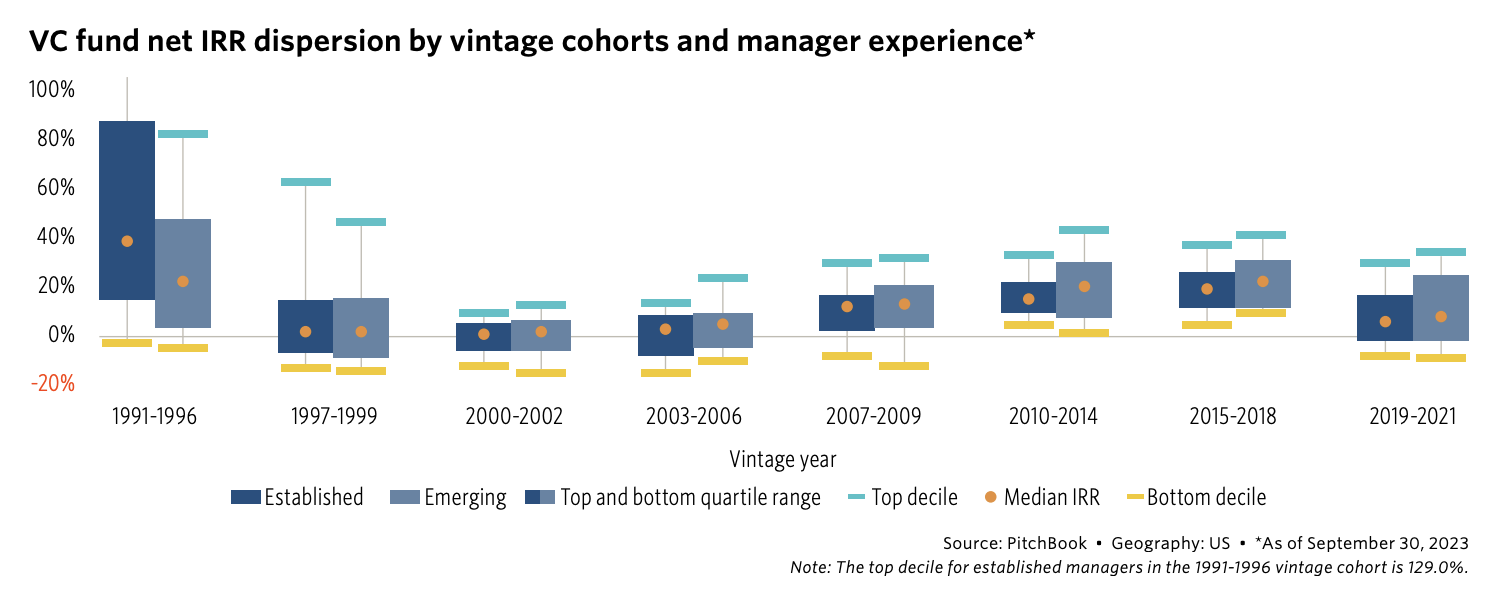
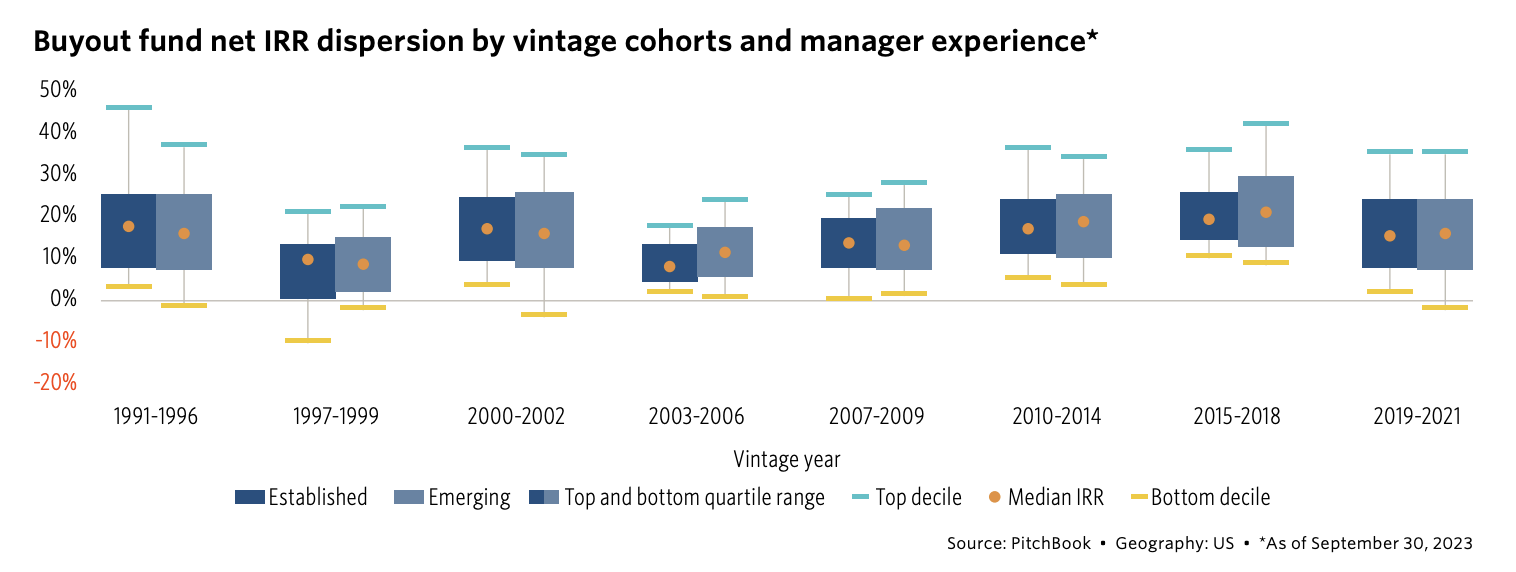
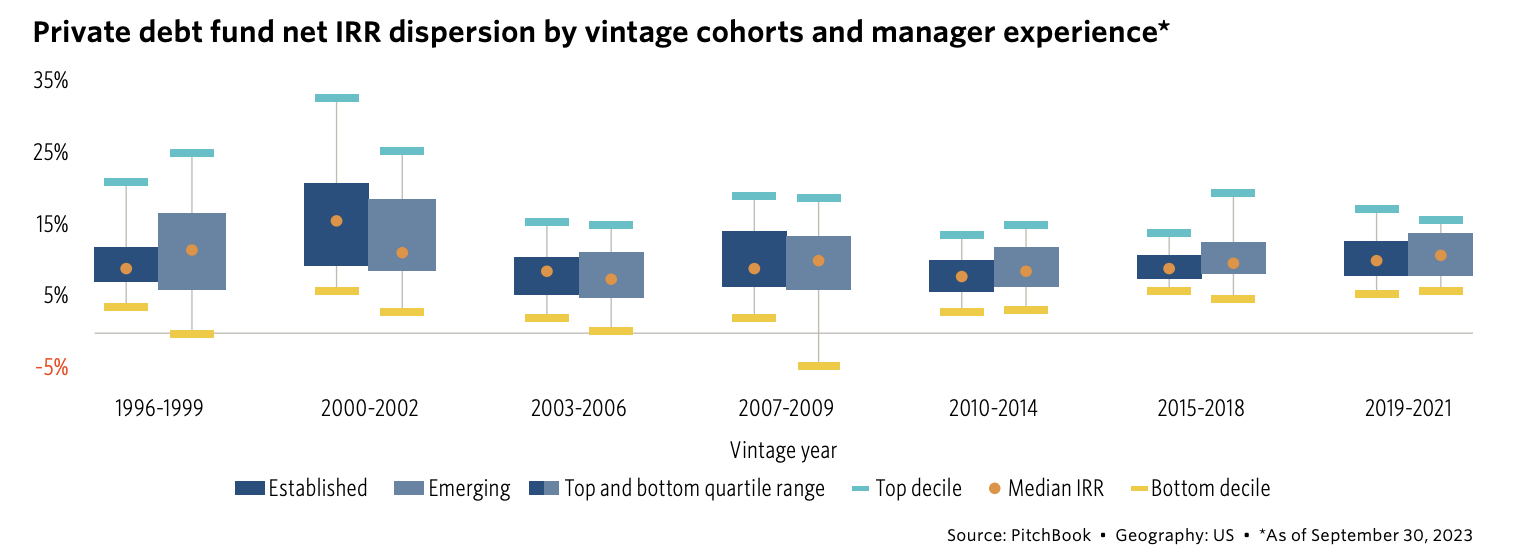
Beyond narrative shifts, emerging managers have consistently delivered outsized returns across vintages and market cycles. According to PitchBook’s Q2 2024 Analyst Note on Emerging Managers, median net IRRs for emerging venture capital, buyout and private credit funds have outperformed those of established peers on a relatively consistent basis over the past decade, reinforcing their ability to generate alpha across varied market conditions.
This pattern is further supported by a 2024 study by Unigestion, which analyzed over 731 first-time funds and found that these managers delivered between 2.7% to 7.8% (percentage points) higher returns than non-first time or established funds, particularly in vintages following major market dislocations such as 2002, 2010, and 2020. These findings suggest that periods of volatility create particularly fertile ground for newer entrants with fresher approaches and more flexible mandates.
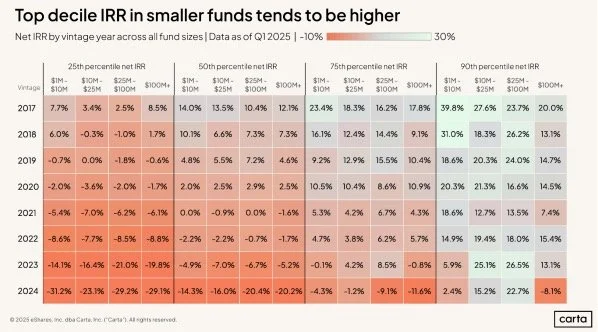
Complementing this, fund size itself appears to play a significant role in performance. Carta’s Q1 2025 Fund Performance Report showed that top decile IRRs for sub-US$10M funds reached ~40% in certain vintages, far outpacing larger funds across every performance metric. Similarly, Carta data indicates that smaller funds are more capital-efficient and have consistently reported higher TVPI multiples across the board to suggest that fund size and emerging status may together influence the ability to generate superior returns.
What Drives Emerging Manager Performance and What LPs Should Look For
The outperformance of emerging managers can be attributed to structural and behavioural dynamics that set them apart. From sector focus and leaner teams to stronger alignment with LPs, these traits often translate into a performance edge:
Alignment with Greater Skin-in-the-Game: Emerging managers often have more personal capital at stake and greater alignment with LPs. Many are founder-led and operate leaner teams, making performance critical for survival and future fundraising.
Access to Uncontested Deals: Emerging GPs, especially those from underrepresented backgrounds or newer geographies, can access deals that are overlooked by mainstream capital. This includes startups in frontier markets, women-led businesses, and niche verticals.
Operational Flexibility: These firms are typically less constrained by legacy processes, enabling them to be more agile in adapting to shifting market conditions.
Smaller Fund Sizes: With smaller pools of capital, emerging GPs are less burdened by the need to “put money to work” in large ticket sizes, allowing them to invest earlier and build deeper relationships with founders.
These structural advantages are especially evident in early-stage strategies, where emerging managers often deploy smaller vehicles with higher ownership stakes, tighter decision-making, and greater alignment with LPs. Free from legacy constraints and processes, these managers are far more agile, closer to the ground, and more open to backing unconventional founders, sectors, or geographies, especially in underserved markets like Southeast Asia.
For LPs evaluating this space, not all emerging managers are created equal. While long track records may be unavailable, other indicators can offer confidence: relevant personal track records, differentiated investment theses, demonstrated deal pipeline, operational maturity, and strong GP-LP alignment. These characteristics go on to explain why emerging managers often deliver higher alpha, even if they lack the long-term track record that traditional LPs tend to prioritize. As Preqin’s 2023 analysis concluded, “LPs who ignore emerging managers risk losing out on returns.”
The Road Ahead for Emerging Managers
As LPs reevaluate their allocation strategies amid slower fundraising cycles and increased scrutiny on performance, many are expanding their lens and pipeline to include smaller, newer managers with differentiated offerings. Today emerging managers are no longer the underdogs - they are making strides to become an essential part of Southeast Asia’s investment universe across asset classes in venture, buyout and private credit. In all, the rise of these emerging managers is at its inflection point. These GPs represent a new kind of capital stewardship that blends agility with capital discipline, proximity with perspective, and returns with resilience. For LPs, they offer not only outsized returns, but a pathway to a more dynamic and inclusive investment ecosystem.